
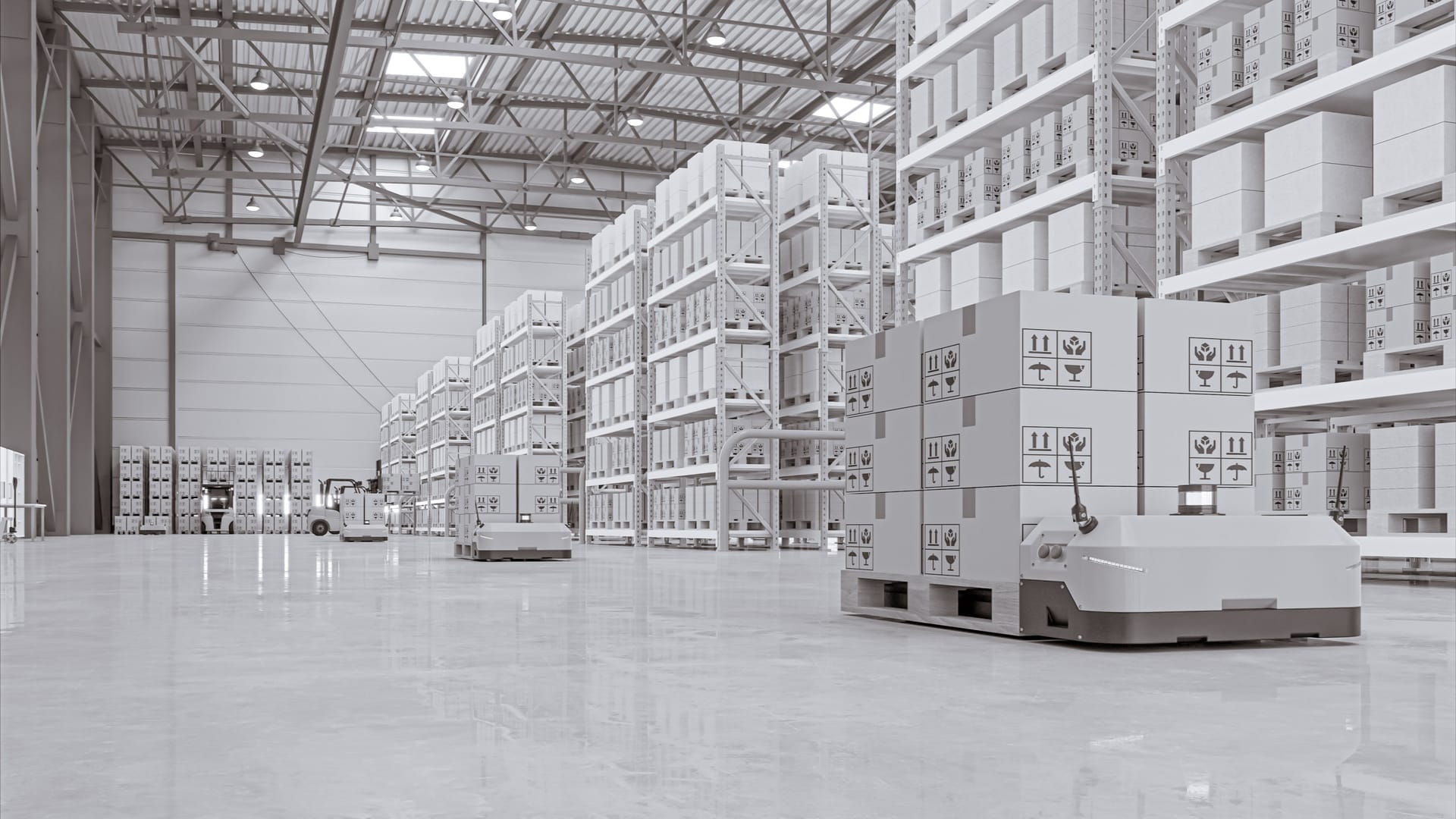
China Robotics
Key Takeaways China Robotics
- Chinese robotics sector files ‘44% of total global patents’.
- Data presented by Buy Shares indicate that China, Japan, and the United States cumulatively control about 58.71% of the global industrial robot installations. Based on the data, China accounts for the largest share at 140,500 units.
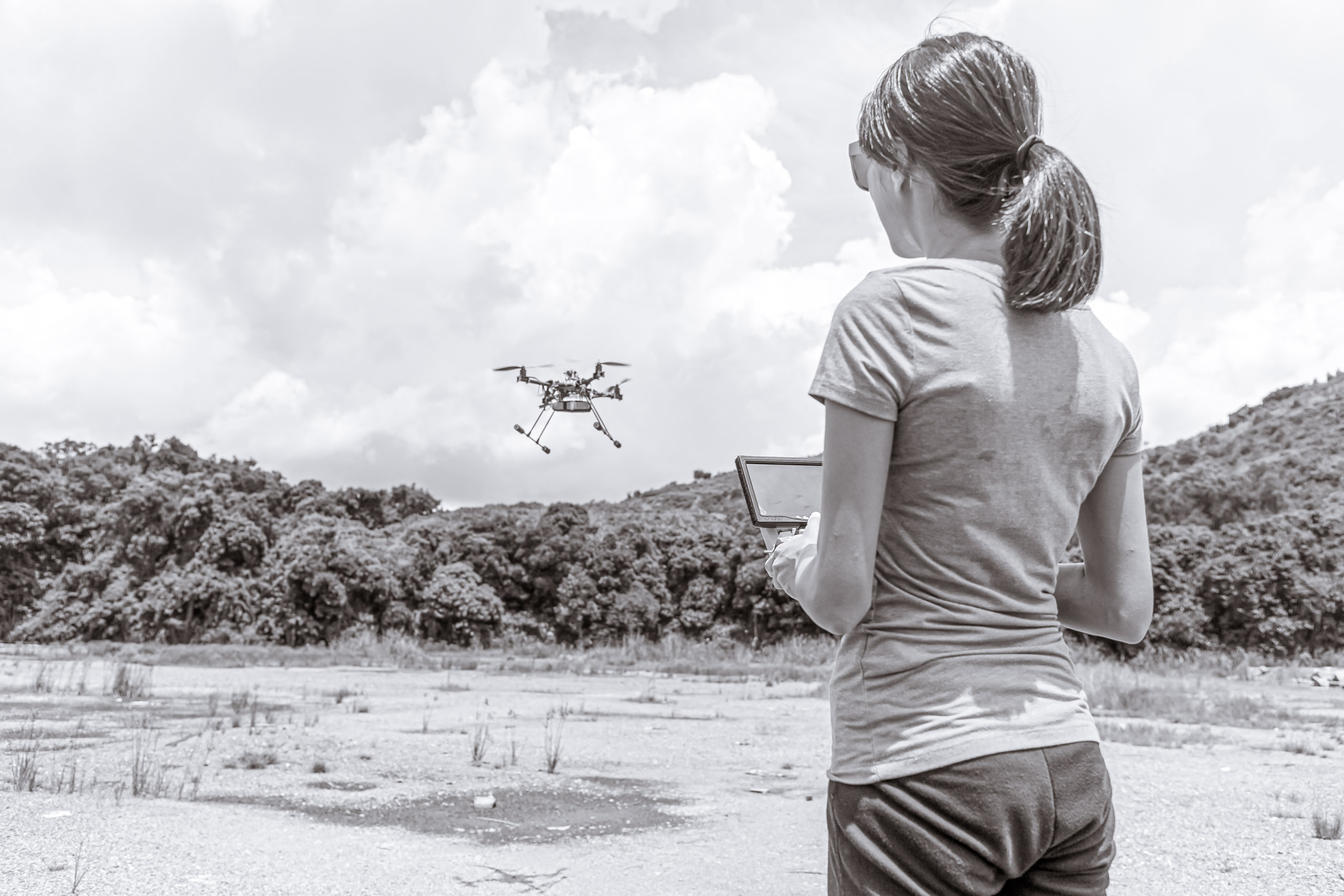
- An increase of service robots and drones in public areas is very much expected for monitoring the crowd size, taking temperatures, or even as robotic waiters and deliverers.
- The “special service” robotics segment, including drones and hazard rescue robots, is expected to hit $910 million market share in 2020 and expands at steady rates moving forward.
- Beijing’s “Made in China 2025” plan, a strategy to upgrade the nation’s industrial sector and cut reliance on foreign technology, set a target for local robot manufacturers to supply half of the domestic market by 2020 and 70% by 2025.
- Of the nearly 100 medical robot companies in China, most are still in infancy.
Documents
Before investing, read the prospectus and the Key Information Document for the relevant share class. Both are available on this page.

Before digging into the place of robots in China, we need to understand the segmentation of the supply chain.
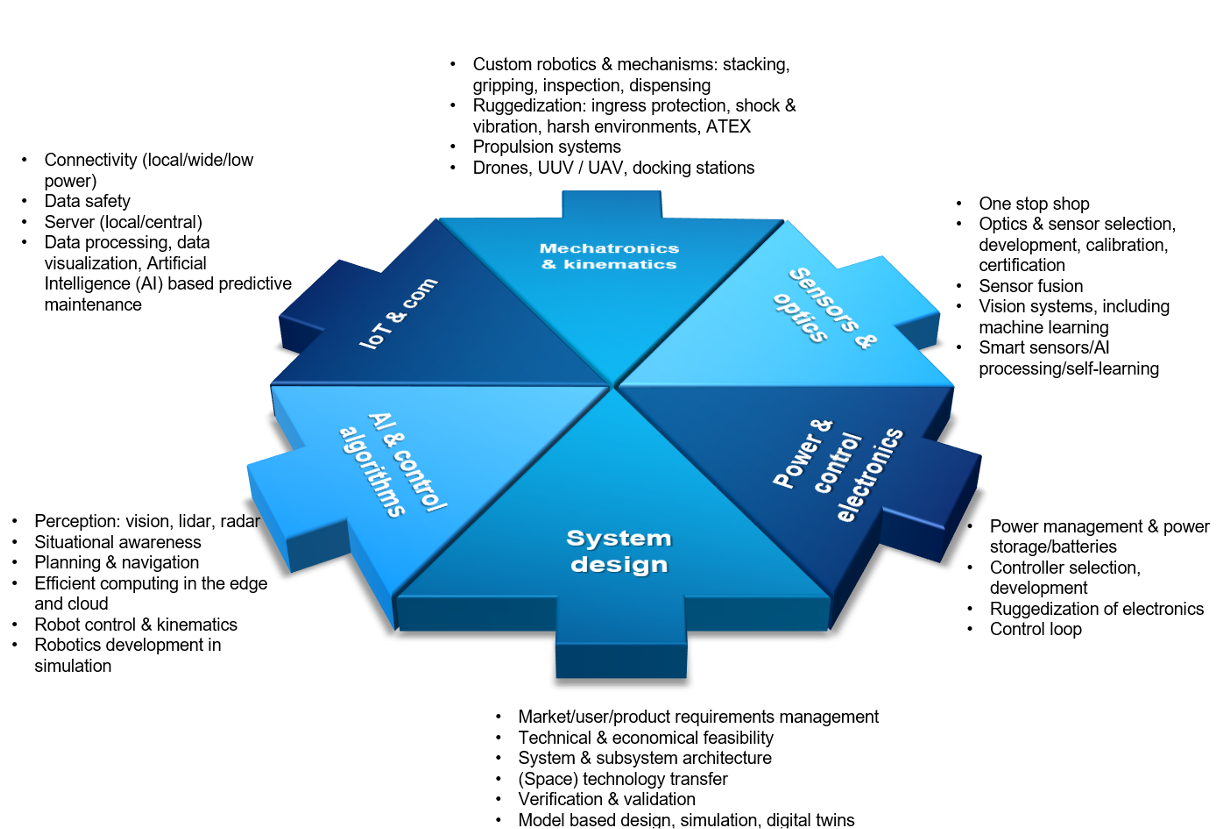
The segmentation of the robotics supply chain: mechatronics & kinematics, sensors & optics, power & control electronics, system design, AI & control algorithms, and IoT & com.
More about this image
A bar chart comparing shares of global robotics patent filings by country. China accounts for 44% of total global filings. China, Japan and the United States together control roughly 58.7% of the total. The remaining share is distributed across other filing countries.
An increase of service robots and drones in public areas is very much expected for monitoring the crowd size, taking temperatures, or even as robotic waiters and deliverers.
Online collaboration tools and tracking and detection systems will stay due to increasing awareness of hygiene, contributing to improving all aspects across multiple industries. Robotic solutions become pregnant due to the pandemic.
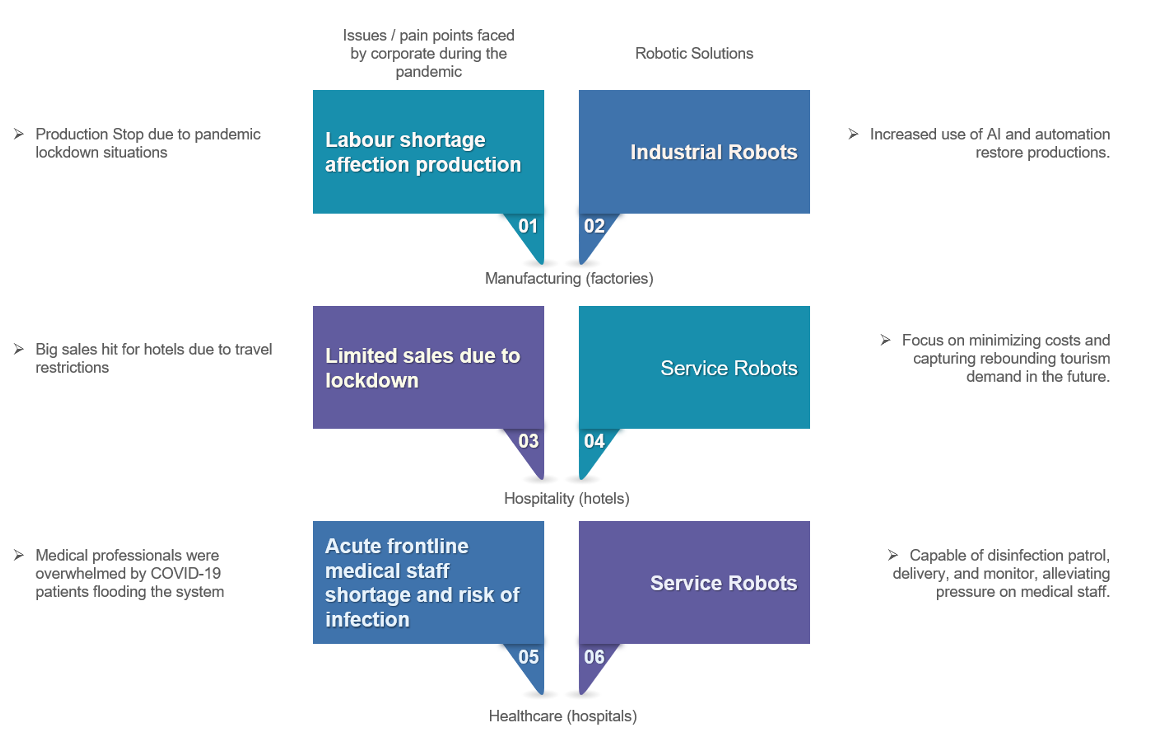
Issues / pain points faced by corporate during the pandemic, and the robotic solutions, in manufacturing (factories), hospitality (hotels) and healthcare (hospitals).
More about this image
A three-tier diagram of the robotics supply chain. The upstream tier holds component manufacture: servomotors, reducers, controllers and sensors. The midstream tier holds robot body assembly. The downstream tier holds system integration and the applications built on it, including industrial, service, special-service and medical robotics.
The tiers are shown in sequence because margin and barrier to entry differ at each: components are the most technically defended, integration the least.